Most organizations do not have a system problem. They have a context problem. ERP systems, CRM platforms, e-commerce solutions, HR systems, and analytics tools all contain valuable data. But when these systems do not work together, manual processes, duplicate work, and uncertainty about which information is actually correct quickly emerge. This is why iPaaS has become a central component of modern digital transformation.
With an integration platform, organizations can connect systems, automate data flows, and create a digital infrastructure that is easier to manage, develop, and scale.
At Lundatech, we work with these challenges every day through Business Cloud – our integration platform that helps organizations gain control over data flows, integrations, and business-critical information.
What is iPaaS?
Integration Platform as a Service, or iPaaS, has become a key component of modern system landscapes. The platform enables organizations to connect business systems, automate data flows, and gain control over information that was previously scattered across multiple systems.
In this guide, we explain what iPaaS is, how it works, when it is needed, and why it has become business-critical for organizations looking to reduce technical complexity, improve data quality, and create the foundation for digital transformation.
In this guide, we cover:
What is iPaaS – and why has it become business-critical?
Most organizations today operate more systems than ever before. ERP systems, CRM platforms, HR tools, e-commerce solutions, analytics tools, and internal databases contain valuable information that businesses rely on every day.
The challenge is that this information is often fragmented across multiple systems. When systems do not work together, several challenges quickly arise:
- Data becomes trapped in silos
- Reporting requires manual effort
- Automation becomes more difficult
- Errors occur during data transfers
- The IT environment becomes difficult to change and manage
- Employees find it harder to trust the information they work with
The result is often slower processes, higher support costs, and weaker conditions for data-driven decision-making.
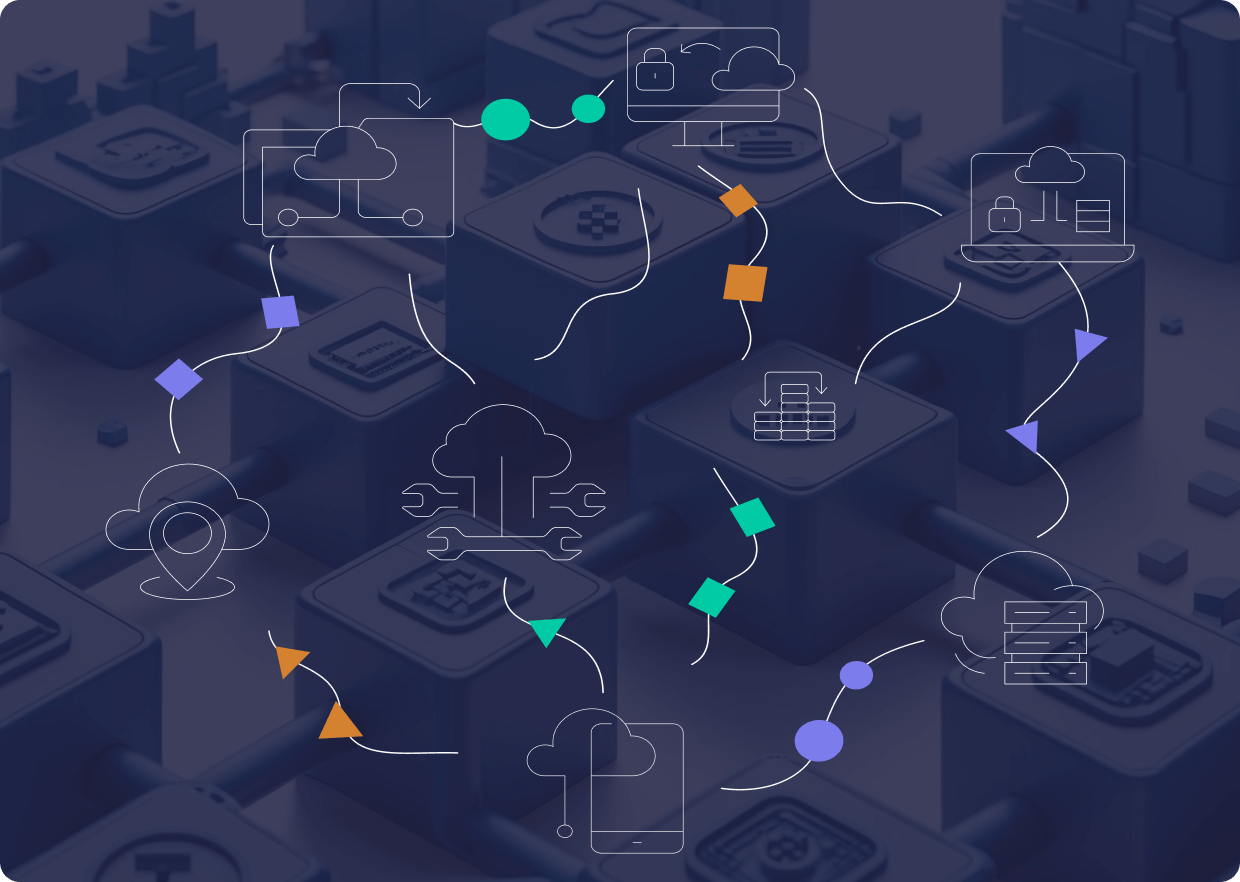
This is where iPaaS (Integration Platform as a Service) comes in. An iPaaS is a cloud-based integration platform that acts as a central hub between an organization’s systems. The platform ensures that information can flow automatically, securely, and in a controlled manner between applications, databases, and services.
Instead of building and maintaining a growing network of point-to-point integrations, integrations are consolidated into a shared platform where they can be developed, monitored, and continuously improved in a structured way.
Modern iPaaS platforms typically provide:
- Visual low-code or no-code development
- Built-in monitoring and traceability
- Data validation and quality controls
- High security and centralized governance
- Scalability for new systems and future requirements
According to the MuleSoft Connectivity Benchmark Report, 98 percent of IT leaders state that integration is critical to achieving business goals, while only a limited share of organizational applications are fully integrated. At the same time, demands for real-time data, AI, compliance, and digital transformation continue to increase. As a result, iPaaS has become a strategic component for organizations looking to create a more connected system landscape and gain greater control over their information flows.
What does iPaaS mean?
iPaaS stands for Integration Platform as a Service and refers to a cloud-based integration platform used to connect systems, applications, databases, and services.
The platform acts as a central hub within an organization’s IT environment, managing the exchange of information between different systems. Instead of building and maintaining separate integrations between every application, integrations are consolidated into a shared platform where they can be developed, monitored, and governed in a structured way.
The purpose is not simply to connect systems. The goal is to create secure information flows, reduce manual work, and give organizations greater control over their data.
Typical features of an iPaaS solution:
Visual Integration Development
Many platforms provide low-code or no-code tools that enable organizations to build integration flows faster and with less development effort.
API Management
Support for creating, publishing, securing, and monitoring APIs used for communication between different systems.
Data Transformation
The ability to transform data between different formats, allowing systems with different structures to exchange information reliably.
Monitoring and Traceability
Real-time monitoring, logging, and historical tracking make it easier to identify and resolve issues before they impact business operations.
Security and Compliance
Modern integration platforms include capabilities for authentication, encryption, access control, and traceability, helping organizations meet security and compliance requirements.
iPaaS Compared to Other Integration Approaches
|
Model
|
Description of the model
|
Limitations
|
|
Point-to-point
|
Each system is connected directly to another system
|
Quickly becomes difficult to manage and maintain as the number of integrations grows
|
|
Middleware/ESB
|
Internal software used to manage integrations in large environments
|
Often requires extensive configuration and ongoing maintenance
|
|
ETL
|
Transfers data in batches between source and target systems
|
Not real-time and not suitable for API-based communication
|
|
iPaaS
|
Cloud-based platform for real-time integrations
|
Requires some architectural understanding to be implemented effectively
|
iPaaS is the next generation of integration technology – built for an environment where change, security, and real-time data are fundamental requirements rather than exceptions.
Why Do Organizations Use iPaaS?
Having many systems is no longer a sign of complexity – it is the norm. The challenge arises when those systems do not work together. When information is scattered across different systems, it becomes more difficult to create efficient processes, ensure data quality, and gain a unified view of the business. The result is often manual work, higher support costs, and a system landscape that is difficult to evolve.
This is where iPaaS makes a difference. An integration platform creates a central hub for an organization’s information flows, making it possible to connect systems in a secure, scalable, and controlled way.
Organizations use iPaaS today to:
- Automate manual processes
- Improve data quality
- Reduce dependence on manual tasks
- Create better decision-making support
- Simplify system replacements and business changes
- Build a solid foundation for digital transformation and AI
According to MuleSoft’s Connectivity Benchmark Report, a large majority of IT decision-makers state that integration needs continue to increase, while many organizations still have a significant proportion of systems that are not integrated. For many businesses, this has become a business-critical challenge.
Common Drivers Behind Investments in iPaaS
Control Over a Growing System Landscape
As organizations grow, new systems, processes, and data sources are continuously added. With an integration platform, it becomes easier to connect new systems without increasing complexity.
Faster Pace of Change
New integrations can be implemented significantly faster than in traditional integration projects. This makes it easier to introduce new systems, digitalize processes, and respond to changing business requirements.
Improved Data Quality and Decision-Making
When information is automatically synchronized between systems, the risk of inconsistent or inaccurate data is reduced. This creates better conditions for reporting, analytics, and data-driven decision-making.
Security and Compliance
Modern integration platforms provide centralized governance, traceability, and security capabilities that help organizations comply with regulations such as GDPR, NIS2, and other regulatory frameworks.
Enabling AI and Automation
AI initiatives depend on accurate and accessible data. By creating connected information flows across business systems, iPaaS becomes an important building block for future AI initiatives and automated processes.
iPaaS is therefore not just an integration tool. It is a strategic platform for organizations that want to gain control over their system landscape, improve data quality, and increase their ability to adapt and evolve.
Common Use Cases for iPaaS
An integration platform can be used across many different types of organizations and system environments. What most use cases have in common is the need to create better information flows, reduce manual work, and make the organization less dependent on individual systems.
Below are some of the most common areas where iPaaS creates business value.
Creating Connected Information Flows
Many organizations today operate multiple business systems simultaneously. Finance, sales, HR, manufacturing, e-commerce, and analytics are often managed in separate solutions.
When systems do not share information, duplicate work and uncertainty about which data is correct quickly arise. With an integration platform, information can flow automatically between systems, ensuring that everyone works with the same data regardless of which application they use.
Automating Manual Processes
Manual export and import processes are still common in many organizations.
With iPaaS, recurring tasks can be automated, for example:
- Customer information automatically synchronized between systems
- Order flows between e-commerce platforms and ERP systems
- Invoice management and financial processes
- Customer service cases routed to the appropriate system
This reduces administrative work and frees up time for more value-creating activities.
Improving Data Quality
When the same information is entered in multiple locations, the risk of errors and inconsistencies increases. An integration platform can validate data before it is transferred and ensure that information is accurate, complete, and up to date throughout the organization. This leads to better reporting, fewer errors, and greater trust in business data.
Simplifying System Replacements and Transformation Projects
Few organizations use the same systems forever. When implementing a new ERP system, CRM platform, or business application, integrations often become one of the biggest challenges.
With an integration platform acting as a central hub, it becomes easier to replace individual systems without having to rebuild the entire integration architecture. This gives organizations greater flexibility and shorter lead times when managing change.
Enabling AI and Data-Driven Operations
AI, analytics, and automation require access to accurate and up-to-date information from multiple sources. For many organizations, the integration platform also becomes the foundation of a modern data platform. When data can be collected, validated, and made available from multiple business systems, organizations gain better capabilities for reporting, analytics, and data-driven decision-making.
It is also a critical prerequisite for succeeding with AI. Without reliable data, it is difficult to create real business value from AI solutions, regardless of how advanced the technology may be. By structuring information flows between business systems, iPaaS helps organizations build the foundation required for future analytics, automation, and AI initiatives.
Delivering Integrations to Customers and Partners
Many organizations need information to flow between multiple business systems, data sources, and external platforms. An integration platform makes it possible to standardize these information flows and manage them in a scalable and controlled way.
iPaaS enables organizations to move from isolated integration projects to a long-term and scalable approach to managing information flows. The result is greater control, higher data quality, and a stronger ability to develop and grow the business over time.
iPaaS enables organizations to move from isolated integration projects to a long-term and scalable approach to managing information flows. The result is greater control, higher data quality, and a stronger ability to develop and grow the business over time.
How Does iPaaS Differ from Other Integration Solutions?
Organizations have been integrating systems for decades. The difference today is that the requirements have changed. Modern businesses need to manage more systems, larger volumes of data, and a faster pace of change than ever before. At the same time, cloud services, AI, and increasing security requirements have made integration more business-critical than ever.
As a result, it is no longer enough to simply connect two systems. Organizations need to create a connected system landscape where data can flow securely, efficiently, and in a controlled manner. To understand why iPaaS has become so popular, it is useful to compare it with some of the most common integration approaches.
Point-to-Point Integration
What it is:
A direct connection between two systems, often established through APIs or file transfers.
Advantages:
- Quick to implement
- Suitable for individual, stable integrations
Limitations:
- Difficult to scale – every new connection requires additional development
- Limited visibility and traceability
- Often dependent on individual knowledge (“who built what?”)
It quickly becomes a maintenance challenge in organizations with more than three to five systems.
Middleware / ESB (Enterprise Service Bus)
What it is:
A software solution that acts as a hub between systems, often deployed on-premises.
Advantages:
- Centralized business logic
- High degree of control in large, complex IT environments
Limitations:
- Often requires extensive configuration and specialist expertise
- Not designed for cloud applications or rapid change
- Longer time-to-market
Best suited for legacy IT architectures, but can slow down innovation in modern environments.
ETL Tools (Extract, Transform, Load)
What it is:
Tools used to extract data from a source, transform it, and load it into a target system, typically for reporting or analytics purposes.
Advantages:
- Well suited for large data volumes
- Commonly used in data warehouse and BI environments
Limitations:
- Not designed for real-time processing
- Primarily based on batch processing
- Not suitable for application integration or bidirectional data flows
ETL often complements iPaaS, but it does not replace it.
iPaaS – Cloud-Based Integration Platform
What it is:
A platform service for building, managing, and monitoring integrations, often through a visual interface.
Advantages:
- Scalable and quick to implement
- Supports both cloud services and on-premises systems
- Built-in logging, data validation, and API management
- User-friendly through low-code or no-code capabilities
Built for environments where change, speed, and security are standard requirements.
Comparison table
|
Feature/Approach
|
Scalability
|
Real- time
|
Cloud support
|
Visibility
|
TCO
|
|
Point-to-point
|
Low
|
Yes,
|
Limited
|
Low
|
High
|
|
Middleware/ESB
|
Medium
|
Yes
|
Limited
|
Medium
|
High
|
|
ETL
|
Low
|
No
|
Yes
|
Medium
|
Medium
|
|
iPaaS
|
High
|
Yes
|
Yes
|
High
|
Low/Medium
|
What differentiates iPaaS from traditional integration approaches is not only the technology behind the platform. The key difference is the ability to create centralized control over an organization’s systems and information flows.
Instead of managing a growing network of individual integrations, organizations gain a shared platform for monitoring, data quality, security, and continuous development. This makes it easier to introduce new systems, support digital transformation, and create the information flows required for analytics, automation, and AI.
For organizations looking to reduce complexity while increasing their ability to adapt and evolve, iPaaS has therefore become the natural next step in modern system integration.
Key Capabilities of a Modern iPaaS Platform
Not all integration platforms offer the same capabilities. What differentiates a modern iPaaS platform from simpler integration tools is its ability to provide control over an organization’s integrations and information flows – from development and operations to monitoring, security, and continuous improvement.
Below are some of the most important capabilities to evaluate when selecting an integration platform.
Faster Integration Development
Modern iPaaS platforms provide visual development tools that make it possible to build and modify integrations more quickly. This reduces dependence on specialist expertise, shortens lead times, and makes it easier for business and IT teams to collaborate on integration initiatives.
Support for the Entire IT Environment
Most organizations today operate in hybrid environments consisting of both cloud-based and on-premises systems. A modern integration platform should be able to manage information flows between:
- Cloud services
- On-premises business systems
- Databases
- APIs
- Files and other data sources
This ensures that the organization’s systems can be integrated in a connected and consistent way.
Real-Time Data When the Business Needs It
For many processes, nightly batch jobs are no longer sufficient. Modern integration platforms can support both real-time information flows and scheduled processes, ensuring that information is always available when needed.
Data Quality You Can Trust
Data quality is one of the most important factors behind successful digital transformation. An integration platform should therefore be able to validate information before it is transferred between systems, detect anomalies, and notify the appropriate people when action is required. This reduces the risk of inaccurate reports, duplicate work, and unnecessary support efforts.
Security and Compliance
Integrations often handle business-critical information. A modern iPaaS platform should therefore provide capabilities for:
- Encryption
- Access control
- Logging and traceability
- Version management
These capabilities help organizations comply with regulations such as GDPR, NIS2, and other regulatory frameworks.
API Management and Reusability
APIs play a central role in modern system landscapes. An integration platform should make it possible to create, document, and manage APIs in a structured manner while also enabling existing integrations to be reused as new requirements emerge.
Prebuilt Connectors That Reduce Implementation Time
A broad library of prebuilt connectors for ERP systems, CRM platforms, e-commerce solutions, and other common business applications makes it possible to get started faster and reduce the need for custom development.
Ultimately, a modern iPaaS platform is not about individual features. It is about creating a stable, secure, and scalable system landscape where information can flow between business systems without unnecessary complexity.
Who needs iPaaS - and when?
Most organizations do not start by looking for an integration platform. They start by experiencing the consequences of systems that do not work together. Initially, integration challenges can often be managed manually or through individual point-to-point integrations. However, as the business grows, complexity increases. More systems are introduced, data volumes expand, and demands for speed, security, and data quality become greater.
This is when many organizations realize that integration is no longer just a technical detail – it is a strategic issue. Below are some common signs that it may be time to evaluate an integration platform.
You Manage Many Manual Information Flows
Reports are compiled manually. Information is exported and imported between systems. Employees spend time validating and correcting data. An integration platform automates information flows and reduces the need for manual work. The result is fewer errors, improved data quality, and more time for value-creating activities.
You Struggle to Get a Unified View of the Business
When ERP systems, CRM platforms, e-commerce solutions, and other business applications contain different versions of the same information, it becomes difficult to make decisions with confidence. An integration platform helps create connected information flows where data can be shared between systems in a controlled manner.
New Systems Take Too Long to Implement
If every new system requires custom-built integrations or extensive consulting efforts, the pace of change slows down. With an integration platform acting as a central hub, it becomes easier to connect new systems and adapt the system landscape as business needs evolve.
You Lack Visibility Into Data Quality and Integrations
Many organizations know that data flows between systems but have limited visibility into what actually happens when something goes wrong. A modern integration platform provides monitoring, logging, and data validation capabilities that make it easier to identify and resolve issues before they impact the business.
Security and Compliance Requirements Are Increasing
As more systems, users, and data sources become connected, the need for control and traceability also increases. Integration platforms help organizations meet security requirements through centralized governance, encryption, logging, and access control.
You Want to Enable AI and Data-Driven Operations
AI, analytics, and automation depend on reliable access to information from multiple systems. If data is fragmented or inconsistent, it becomes difficult to realize the value of AI initiatives. An integration platform helps create the foundation required for future digital transformation initiatives.
Which Organizations Benefit Most from iPaaS?
Integration platforms are used by organizations across many industries, but they are particularly valuable for:
- Growing companies with an increasing number of business systems
- Organizations undergoing digital transformation
- Companies looking to improve data quality and reduce manual work
- Businesses with strict security and compliance requirements
- SaaS companies that deliver integrations to customers and partners
- Organizations aiming to create better conditions for AI and data-driven decision-making
As the number of systems grows, data volumes increase, and the pace of change accelerates, the integration platform becomes a central part of the organization’s digital infrastructure.
Benefits and business value of iPaaS
When organizations invest in an integration platform, the goal is rarely to create more integrations. The goal is to build a business that is easier to develop, easier to manage, and better prepared for future change.
One of the most immediate benefits is the ability to automate manual tasks. When information flows automatically between business systems, the need for duplicate data entry, manual validation, and time-consuming administration is significantly reduced. Employees can instead focus on analytics, business development, and continuous improvement initiatives.
At the same time, data quality improves. When information is synchronized across systems, the risk of inconsistent data, inaccurate reports, and uncertainty about which information is correct is reduced. This creates better decision-making support and makes it easier to operate as a data-driven organization.
An integration platform also contributes to lower costs over time. Standardized integrations are easier to maintain than a growing network of point-to-point connections. When new systems need to be introduced or existing solutions replaced, changes can be implemented more quickly and with less impact on the rest of the system landscape.
For organizations with strict security and compliance requirements, an integration platform also provides greater control over how information moves between systems. Capabilities such as logging, traceability, encryption, and access control make it easier to comply with regulations such as GDPR and NIS2.
Another often underestimated benefit is the reduced dependence on individual employees. When integrations are built and managed on a shared platform, knowledge, documentation, and monitoring become part of the solution itself rather than being tied to specific individuals. In practice, the business value of iPaaS comes down to three key benefits: greater control over information flows and integrations, higher data quality across the organization, and an increased ability to adapt and evolve.
This is why the integration platform has become such an important component of modern digital transformation.
How Lundatech Business Cloud is used as iPaaS
So far, we have explored what iPaaS is, the challenges an integration platform solves, and the business value it can create. Lundatech Business Cloud is our integration platform and iPaaS solution. The platform is designed for organizations that need more than individual integrations and want to establish long-term control over their system landscape.
Business Cloud acts as a central hub between business systems, ensuring that information can flow securely, automatically, and in a controlled manner between ERP systems, CRM platforms, e-commerce solutions, data platforms, and other business-critical applications. The objective is not only to connect systems. The objective is to ensure that the organization always has access to accurate, up-to-date, and reliable information.
From Integrations to Control
Many organizations turn to us when the number of systems has grown and integrations have become difficult to manage. By consolidating integrations, monitoring, and data validation into a single platform, it becomes easier to understand how information moves between systems, identify issues early, and create a stable foundation for continued digital development.
Data Quality You Can Trust
Business Cloud includes capabilities for data validation, monitoring, and traceability that help organizations identify and resolve issues before they impact the business. The result is greater trust in data, fewer support incidents, and better conditions for reporting, analytics, and data-driven decision-making. For many organizations, this also becomes the foundation for a future data platform.
Built for Change
Businesses are constantly evolving. New systems are introduced, processes are refined, and demands for data continue to grow. Business Cloud makes it possible to evolve the organization’s IT environment without rebuilding the integration architecture from scratch. This provides greater flexibility and shorter lead times for change initiatives.
A Platform for Digital Transformation and AI
Many of today’s initiatives in AI, automation, and advanced analytics depend on the ability to collect information from multiple systems and present it in a consistent way. By creating structured and reliable information flows, Business Cloud helps organizations establish the foundation required for future digital services.
In practice, Business Cloud is about more than integrations. It is about creating control over data, ensuring data quality, and giving organizations better conditions to adapt and evolve.
Are You Ready for iPaaS? – A Checklist for Evaluating Your Need
Many organizations only recognize the need for an integration platform once complexity begins to impact the business. Review the questions below. If you answer yes to several of them, there is likely value in reviewing how your integrations are managed today.
System Landscape
☐ We have multiple business-critical systems that need to share information with one another.
☐ Information is still moved manually between systems or consolidated in spreadsheets.
☐ It is difficult to get a unified view of the business because data exists in multiple locations.
Data Quality and Control
☐ We experience issues with inconsistent or inaccurate data between systems.
☐ We lack clear visibility into how information flows throughout the organization.
☐ We have strict requirements related to security, traceability, or regulatory compliance.
Change and Growth
☐ New systems or integration projects take longer than they should.
☐ It is difficult to replace or further develop existing systems without affecting other parts of the IT environment.
☐ We want to create better conditions for AI, automation, or data-driven decision-making.
☐ We see a need to scale the business without integrations becoming a bottleneck.
Business Agility
☐ It is difficult to replace one system without affecting others.
☐ Our digital transformation initiatives have slowed down because of technical debt.
☐ We need to exchange information between more internal and external systems than before.
☐ We need to scale the business without rebuilding everything from scratch.
How Many Yes Answers Did You Get?
0–3 yes:
Your integration environment is likely functioning well today, but it may still be wise to establish a plan for future growth and change.
4–7 yes:
You are facing several challenges that an integration platform could help solve.
8–10 yes:
Integrations have most likely become a strategic issue for your organization, and there are often significant efficiency gains to be achieved through a more structured integration architecture.
iPaaS is fundamentally not about integrations.
It is about creating control over data, reducing complexity within the organization’s IT environment, and improving the ability to adapt and evolve. When information can flow securely and automatically between systems, it becomes easier to make decisions, introduce new services, and take advantage of opportunities within AI, analytics, and digital transformation.
For many organizations, the integration platform has therefore become a central part of the digital infrastructure – not only for the IT department, but for the entire business.
Next Step
Do you need help evaluating your integrations, information flows, or IT environment?
We help organizations assess their current situation, identify bottlenecks, and evaluate how an integration platform such as Business Cloud can contribute to improved data quality, increased efficiency, and greater organizational agility.





 Lundatech