




 Lundatech
1 min read
What is iPaaS? Why Integration Platforms Have Become the Hub of Modern System Landscapes
Most organizations do not have a system problem. They have a context problem. ERP systems, CRM platforms, e-commerce solutions, HR systems, and...









Most organizations do not lack systems. They lack connectivity between those systems. ERP systems, CRM platforms, e-commerce solutions, HR systems, data platforms, and analytics tools contain large amounts of valuable information. However, when systems do not work together, manual processes, duplicate work, and uncertainty about which data is correct quickly arise.
This is where an integration platform comes in. An integration platform makes it possible to connect business systems, create secure information flows, and give organizations greater control over how information is shared, used, and refined. The result is improved data quality, more efficient processes, and better conditions for digital transformation.
In this guide, we explore what an integration platform is, how it works, and the role it plays in modern system landscapes, data platforms, and AI initiatives.
Chapters:
1. What Is an Integration Platform?
2. iPaaS – Integration Platform as a Service
3. Integrations in Modern IT Environments
4. API integration
5. Integration Services
6. Developing an Integration Strategy
7. Benefits of Integration Platforms
8. Choosing the Right Integration Platform
9. The Future of Integration Platforms
An integration platform is a solution that connects business systems and enables information flows to be managed in a structured and controlled way. In most organizations, information is spread across multiple systems. ERP systems, CRM platforms, HR systems, e-commerce platforms, and analytics tools often contain different parts of the same business reality. When systems do not work together, manual processes, duplicate work, and uncertainty about which information is correct quickly arise.
An integration platform acts as a central hub where data can be exchanged, validated, and monitored. This makes it possible to create connected information flows between business systems and gives organizations greater control over their data. The result is more efficient processes, higher data quality, and better conditions for data-driven decision-making.
Most organizations do not face a systems problem. They face an information problem. As businesses grow, the number of systems, data sources, and digital services increases. At the same time, the demand for rapid access to information, high data quality, and the ability to adapt to new business requirements continues to grow.
Without a cohesive integration strategy, information risks becoming trapped in silos, leading to manual work, higher support costs, and poorer decision-making. An integration platform helps organizations create structure within this complexity by ensuring that information can flow between systems in a secure, automated, and traceable way.
For many organizations, the integration platform has therefore become a central component in digital transformation, data platform initiatives, and AI strategies.
A modern integration platform is about far more than connecting systems. It should help organizations create better information flows, improve data quality, and increase their ability to adapt when new requirements emerge. The most valuable integration platforms are characterized by three key areas.
Many organizations still rely on manual processes where information is moved between systems through export files, email, or manual data entry. By automating these information flows, organizations can reduce administration, minimize the risk of errors, and free up time for more value-creating work.
This can include everything from financial processes and order flows to HR processes and internal reporting.
Data quality is a critical factor in making the right business decisions. An integration platform ensures that information can be shared between business systems in a controlled manner and helps organizations reduce information silos, conflicting records, and manual errors.
The result is better reporting, greater trust in data, and improved conditions for data-driven decision-making.
Modern organizations need to be able to introduce new systems, develop new processes, and take advantage of opportunities in analytics, automation, and AI. Achieving this requires a stable foundation where information can be shared securely and systematically between systems.
The integration platform therefore becomes more than just a tool for integrations. It becomes a central component of the organization’s digital infrastructure and an important building block for future data platforms and AI initiatives.
As demands for data quality, security, and business agility continue to increase, the integration platform has become a strategic investment for organizations seeking long-term control over their information flows.
iPaaS (Integration Platform as a Service) is a cloud-based integration platform that enables organizations to connect business systems, automate information flows, and manage integrations from a central location. Unlike traditional integration solutions, iPaaS is designed for modern IT environments where cloud services, business applications, data platforms, and external services need to interact in a secure and scalable way.
For many organizations, iPaaS has become the natural evolution of integration management because it simplifies the growing demands for data quality, security, and business agility.
As the number of systems increases, managing integrations through individual point-to-point connections or traditional integration solutions becomes increasingly difficult.
An iPaaS platform brings integrations, monitoring, and data validation together in a single platform. This makes it easier to:
Automate information flows
Ensure data quality
Reduce manual work
Simplify the introduction of new systems
Create better conditions for analytics and AI
iPaaS has become the dominant model for modern integration platforms because it combines flexibility, scalability, and faster integration development. For organizations pursuing digital transformation, this provides better conditions for managing growing data volumes, new systems, and changing business requirements.
Organizations continuously evolve. New systems are introduced, processes are refined, and demands for information continue to grow. An iPaaS platform makes it possible to evolve the integration architecture without having to rebuild the entire solution whenever new requirements emerge.
Modern integration platforms provide tools that enable organizations to develop and modify integrations much faster than in traditional integration projects. This gives the organization greater flexibility and makes it easier to respond to changing business needs.
Many organizations are currently investing in analytics, automation, and AI. For these initiatives to create value, access to accurate and up-to-date information from multiple systems is essential. By creating connected information flows, iPaaS becomes an important building block for modern data platforms and future AI initiatives.
A modern iPaaS platform includes capabilities that help organizations gain control over information flows, integrations, and information management.
Common features include:
The ability to connect cloud services, business applications, databases, and other data sources in a structured way.
Ensures that information exchanged between systems is accurate, complete, and compliant with defined business rules.
Makes it possible to create, publish, and manage APIs used for communication between different systems and services.
Provides visibility into how information moves between systems and makes it easier to identify and resolve issues.
Protects business-critical information through capabilities such as authentication, access management, encryption, and logging.
Reduces the need for manual work by automating recurring processes and data transfers between different systems.
iPaaS has become a central component of modern integration platforms because it combines flexibility, scalability, and control over business information flows. For organizations pursuing digital transformation, the platform creates better conditions for data quality, analytics, data platforms, automation, and future AI initiatives.

Integrations are not primarily about connecting systems. They are about ensuring that information can flow between the organization’s different processes, data sources, and applications in a secure and controlled way. In modern organizations, information is often spread across multiple systems. ERP systems, CRM platforms, HR systems, data platforms, and other business-critical solutions contain different parts of the same business data. Without integrations, information silos, manual processes, and poor data quality quickly emerge.
An integration platform makes it possible to create connected information flows between these systems and ensures that the right information is available where it is needed.
Many integrations are designed to create information flows between ERP systems and other business-critical applications. Examples include:
Financial systems and ERP systems
Order and logistics flows
Procurement and supply chain processes
Production and operational systems
Organizations often need to consolidate information from multiple systems to create a unified information foundation. Through integrations, data can be shared between ERP systems, CRM platforms, operational systems, data platforms, and analytics tools. This improves data quality and creates better conditions for reporting, analytics, and data-driven decision-making.
A growing use case for integrations is consolidating data from multiple sources into a shared data platform. This makes it possible to:
Create better reporting
Build analytics solutions
Ensure data quality
Support AI initiatives and automation
For many organizations, the data platform serves as the hub for reporting, analytics, and future AI initiatives. The integration platform plays a central role by ensuring that data can be collected, validated, and shared across the organization’s systems.
Modern organizations rarely operate in exclusively cloud-based or exclusively on-premises environments. Integrations therefore often need to support information exchange between:
Cloud services
On-premises business systems
Databases
External platforms
Other business systems and data sources
An integration platform provides the flexibility required to manage these complex system landscapes over time.
Historically, integrations have often been viewed as a technical issue. Today, they are increasingly a business issue. As data quality, analytics, automation, and AI become more important, the demands on how information is managed between systems also increase.
Modern integrations are therefore about far more than connecting applications. They are about creating control over business information flows, ensuring data quality, and building a stable foundation for continued digital transformation, analytics, and AI.
APIs (Application Programming Interfaces) are one of the most common methods for exchanging information between different systems. They act as standardized interfaces that enable applications, databases, and services to communicate with one another in a secure and controlled manner.
In modern system landscapes, APIs play a central role because they make it possible to create flexible integrations between business systems without requiring information to be managed manually.
Many of today’s integration platforms rely on APIs to create information flows between ERP systems, CRM platforms, data platforms, operational systems, and other data sources.
Through API-based integrations, organizations can:
Automate information exchange between systems
Ensure access to up-to-date information in real time
Reduce manual work
Create better conditions for analytics and reporting
Support automation and AI initiatives
APIs make it possible to integrate systems without requiring extensive changes to the underlying infrastructure. This makes it easier to evolve the system landscape as business requirements change.
API-based integrations enable information exchange in real time. This gives the organization access to current information and creates better conditions for data-driven decision-making.
When new systems or data sources are introduced, APIs can be used to connect them to the existing system landscape without rebuilding the integration architecture from scratch.
Data platforms, analytics solutions, and AI initiatives depend on the ability to retrieve information from multiple systems in a structured way. APIs therefore play a central role in modern data architectures by enabling access to up-to-date information from the organization’s various systems and data sources.
For many organizations, APIs are an important building block in creating connected information flows and improving data quality.
Although APIs are an important integration method, they rarely constitute a complete integration strategy on their own. To gain control over the entire system landscape, organizations often require an integration platform capable of handling monitoring, data validation, security, and governance of information flows across multiple systems.
APIs are therefore not an alternative to integration platforms. They are one of the most important building blocks in modern integration architectures and enable the information flows required for data platforms, analytics, automation, and AI.
An integration platform creates the foundation for connecting business systems and information flows. However, for integration initiatives to create long-term value, more than technology is often required. Expertise in architecture, information management, and business development is also essential.
Integration services help organizations plan, develop, and manage integration solutions that support business objectives and future requirements.
Many organizations face challenges such as:
Growing system landscapes
Poor data quality
Manual information flows
Difficulties introducing new systems
Increasing demands for analytics, AI, and digital transformation
In these situations, integration expertise can help create structure, reduce complexity, and ensure that integration initiatives support the organization’s long-term development.
Successful integration initiatives are rarely just about connecting two systems. They are about creating a well-defined integration strategy that ensures:
High data quality
Scalable information flows
Security and governance
Support for analytics and AI
The ability to evolve the system landscape over time
By taking a strategic approach to integrations, organizations can more easily avoid technical debt and create a more flexible digital architecture.
Integration work does not end when an integration goes live. Systems evolve, new data sources are introduced, and business requirements change over time. As a result, integration solutions need to be continuously monitored, enhanced, and adapted to continue delivering business value.
A modern integration platform combined with the right integration expertise provides organizations with better conditions for managing this change in a controlled and sustainable way.
For many organizations, integrations are a prerequisite for becoming more data-driven. By creating connected information flows between business systems, organizations can improve data quality, build modern data platforms, automate processes, and create better conditions for analytics and AI.
Integration services are therefore about more than technology. They are about creating the structure required for organizations to evolve, adapt, and generate long-term value from their data.
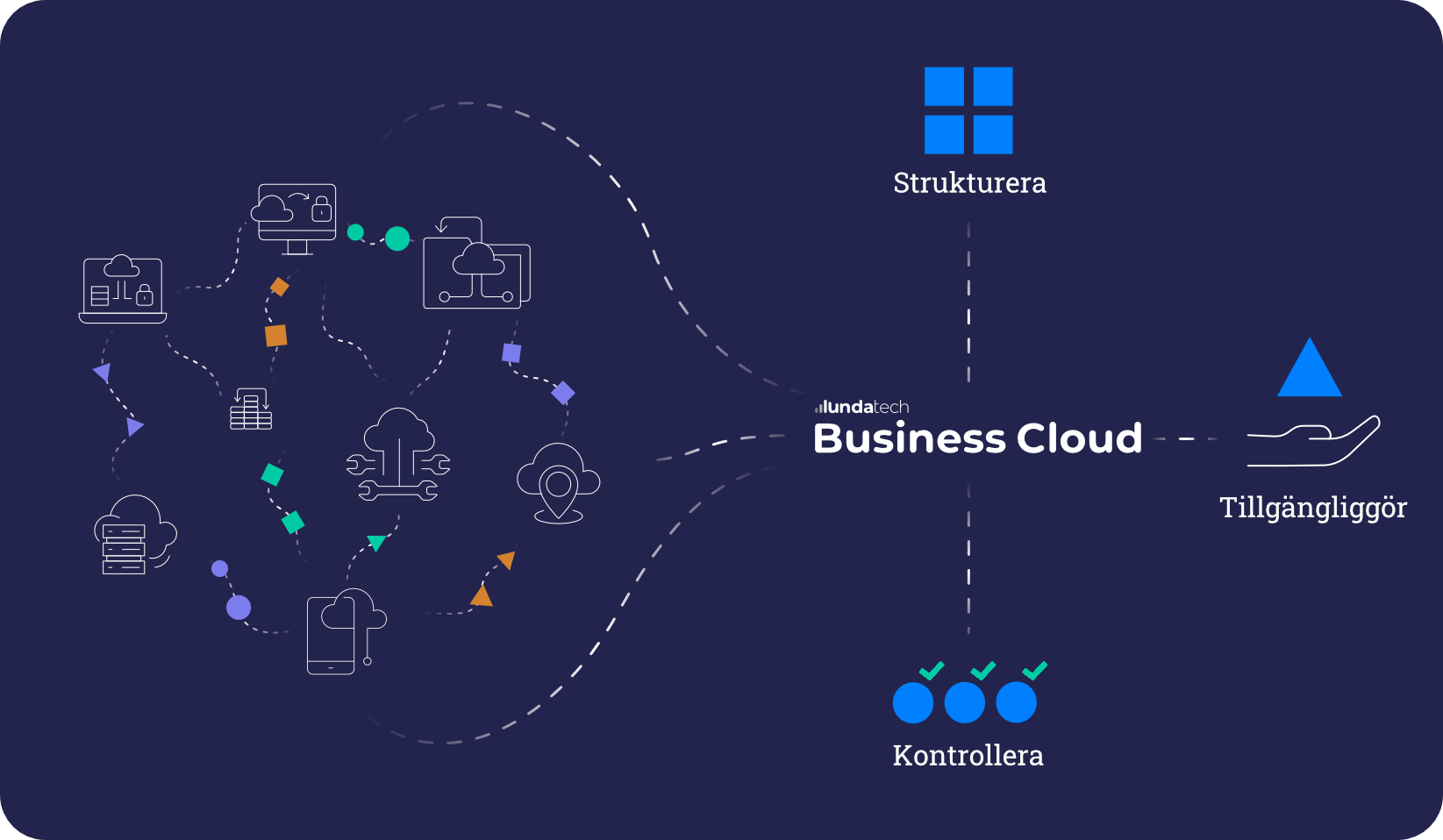
An integration strategy is about far more than technology. It is about creating a long-term plan for how information should flow between business systems, processes, and data sources. As organizations grow, new systems are introduced, business requirements evolve, and demands for analytics, automation, and AI increase.
Without a clear integration strategy, the system landscape risks developing in a fragmented way, resulting in greater complexity, poorer data quality, and higher costs over time. A well-defined integration strategy helps organizations gain control over information flows, reduce technical debt, and ensure that new initiatives can be implemented without integration becoming a bottleneck.
The first step is to create a clear understanding of the organization’s system landscape. The organization needs to understand:
Which systems are currently in use
How information flows between systems
Where manual tasks occur
Where data quality is affected
Which systems are business-critical
The objective is to identify both the strengths and limitations of the existing integration architecture.
An integration strategy should be based on the organization’s information requirements rather than on individual systems. The focus should be on questions such as:
What information needs to be shared across different parts of the organization?
Which information flows are business-critical?
Which processes should be automated?
What requirements exist for security and traceability?
By focusing on information flows, it becomes easier to create an integration architecture that supports long-term business objectives.
When new systems are introduced or existing solutions are replaced, the integration architecture should be able to evolve without requiring the entire system landscape to be rebuilt. The integration strategy should therefore establish the conditions for:
Standardized integrations
Centralized governance and monitoring
High data quality
Flexibility for future changes
Efficient management of new systems and data sources
An integration platform serves as the hub of this architecture.
Many organizations are currently investing in analytics, automation, and AI. For these initiatives to create business value, access to accurate and up-to-date information from multiple systems is essential.
The integration strategy should therefore ensure that data can be collected, validated, and made available to data platforms, analytics tools, and future AI solutions. For many organizations, the integration platform becomes the connecting layer between business systems and the data platform used for analytics and decision support.
An integration strategy is not a one-time project. System landscapes, business requirements, and technical conditions continuously evolve. Therefore, the integration architecture needs to be regularly reviewed and refined to ensure it continues to support business objectives.
A well-developed integration strategy helps organizations:
Improve data quality
Reduce manual work
Create better decision support
Facilitate digital transformation
Create the foundation for analytics and AI
Reduce technical debt
Increase organizational agility
As system landscapes become increasingly complex, the integration strategy has become a central component of modern digital transformation. Organizations that take a strategic approach to integrations gain better control over their information flows, achieve higher data quality, and establish a stable foundation for future digital development, analytics, and AI.
An integration platform creates value at multiple levels within an organization. It not only helps organizations manage integrations and connect systems, but also creates better conditions for data quality, analytics, automation, and future digital development. When information flows are managed in a structured way, it becomes easier to gain control over the system landscape and reduce the complexity that often arises as the number of systems grows over time.
Many organizations operate in complex IT environments where information is spread across multiple platforms and applications. An integration platform acts as a central hub for information exchange and provides visibility into how data moves between business systems. This improves control, reduces dependence on point-to-point integrations, and makes it easier to evolve the system landscape over time.
Data quality is a fundamental prerequisite for making the right business decisions. By automating information flows and ensuring that data is validated before being transferred between systems, the risk of errors, duplicates, and conflicting information is reduced. The result is greater trust in business data and better conditions for reporting and analytics.
When information can be shared automatically between systems, the need for manual tasks is reduced. This frees up time, lowers administrative overhead, and enables the organization to focus on activities that create greater business value. At the same time, it reduces the risk of errors caused by manual information handling.
Many organizations are currently investing in data platforms, analytics solutions, and AI. For these initiatives to create business value, access to accurate and up-to-date information from multiple systems is essential. The integration platform plays a central role by collecting, validating, and making data available for analytics, decision support, and future AI initiatives.
Organizations continuously evolve. New systems are introduced, processes are refined, and new requirements emerge. An integration platform enables the system landscape to evolve without requiring the integration architecture to be rebuilt from scratch every time a change occurs. This gives the organization greater flexibility and reduces the risk of technical debt.
When information from multiple systems can be consolidated and shared in a controlled manner, it becomes easier to create a unified view of the business. This strengthens reporting, analytics, and data-driven decision-making while giving management better conditions for acting on accurate and reliable information.
The integration platform has therefore become a central component of modern digital transformation and an important foundation for data platforms, automation, and AI. It helps organizations gain control over their information flows, improve data quality, and build the foundation required for future data platforms, analytics solutions, and AI initiatives.
Choosing an integration platform is about far more than technology. The platform becomes a central part of the organization’s digital infrastructure and influences how information can be shared, validated, and utilized over time. The selection process should therefore be based on long-term business requirements rather than solely on features and technical specifications.
An integration platform should support both the current and future system landscape. When evaluating different alternatives, organizations should ensure that the platform can handle:
Cloud-based systems
On-premises business systems
Databases and data platforms
APIs and external data sources
Future systems that have not yet been introduced
The objective is to create an integration architecture that can evolve alongside the business.
Integrations are not just about moving information between systems. They are about ensuring that information is accurate, traceable, and usable. A modern integration platform should therefore provide:
Data validation
Monitoring and logging
Security and access control
Version management
The ability to trace information flows across the entire system landscape
This creates better conditions for reporting, analytics, and business governance.
System landscapes continuously evolve. New systems are introduced, business requirements change, and new technological opportunities emerge. An integration platform should therefore enable the organization to evolve its integration architecture without requiring extensive redevelopment every time a change occurs.
Scalability is not only about technology. It is about the organization’s ability to adapt and develop over time.
Many organizations are currently investing in data platforms, analytics solutions, and AI. For these initiatives to create value, the integration platform must be able to collect, validate, and make data available from multiple systems.
The integration platform should therefore be viewed as a critical component of the organization’s future data architecture and as an enabler of analytics, automation, and AI.
The best integration platform is not necessarily the one with the most features. It is the platform that best supports the organization’s goals, information flows, and future development.
When an integration platform is selected from a long-term perspective, organizations create better conditions for data quality, digital transformation, analytics, and AI.
Consider the following questions:
Does the platform provide visibility across the entire system landscape?
Can it support both current and future integration requirements?
Does it support data quality, traceability, and security?
Can it serve as a foundation for data platforms and AI initiatives?
Does it make it easier to evolve the business over time?
If the answer to these questions is yes, there is a strong foundation for the integration platform to create long-term value and support the organization’s continued digital development.
Integration platforms have evolved from being technical integration tools to becoming a central part of organizations’ digital infrastructure. As system landscapes become increasingly complex, the demands on how information is collected, validated, and made available to the business continue to grow.
Several clear trends are driving this development.
Historically, integrations primarily focused on moving information between systems. Today, the focus is increasingly on creating connected information flows that can be used for reporting, analytics, and business management. As a result, the integration platform is increasingly serving as the link between business systems and the organization’s data platform.
AI solutions depend on accurate, up-to-date, and accessible information. For many organizations, the challenge is not a lack of data, but rather that information is spread across multiple systems. Integration platforms therefore play an important role in collecting, structuring, and validating the data used for analytics, automation, and AI initiatives.
Despite the continued shift toward cloud services, many organizations will continue to operate in hybrid environments where cloud-based and on-premises systems coexist. Future integration platforms must therefore be capable of managing information flows across multiple types of systems, data sources, and platforms without introducing additional complexity.
As the volume of data grows, requirements for security, traceability, and regulatory compliance are becoming more stringent. Integration platforms will play an increasingly important role in ensuring control over how information moves between business systems. This is particularly important as regulations such as GDPR, NIS2, and other information governance requirements continue to have a greater impact on organizations’ digital operations.
Perhaps the most significant change is that the integration platform is no longer viewed solely as a technical component. It has become a strategic enabler of digital transformation. Organizations that succeed in gaining control over their information flows are better positioned to develop data platforms, automate processes, leverage AI, and adapt to future change.
As a result, the integration platform is no longer just a solution for today’s integration needs—it is a critical part of the organization’s future digital capabilities.


1 min read
Most organizations do not have a system problem. They have a context problem. ERP systems, CRM platforms, e-commerce solutions, HR systems, and...

1 min read
API integration is one of the most important tools for connecting systems, automating flows and building a modern, data-driven business. As companies...
1 min read
Digitalization has long been a priority, but true digital transformation requires more than simply implementing new systems. Today’s organizations...