




 Lundatech
What Is iPaaS? The Role of Integration Platforms in Modern System Landscapes
Streamline your system integration with iPaaS. Learn how a cloud-based integration platform improves data quality and creates a flexible IT...








System integration has evolved from a technical concern into a strategic capability. As digital products, platforms, and integration environments become increasingly complex, it is no longer enough for individual systems to work independently. The key question is how information can be shared, reused, and developed over time without the integration landscape becoming a constraint.
This is why system integration today involves far more than connecting different systems. It affects how integration capabilities are built, how new integrations can be developed, and how integration landscapes can continue to evolve without complexity increasing at the same rate.
At the same time, the integration landscape has changed. In many organizations, standalone integrations have been supplemented or replaced by modern integration platforms, where information flows can be standardized, monitored, and further developed from a shared platform. This changes not only the technology but also how integration work is organized and developed over time.
In this article, we explain what system integration means today, why integration capability has become a strategic priority, and how modern integration platforms lay the foundation for data platforms, AI, and continued digital development.
System integration is the discipline that enables systems, applications, and data sources to communicate in a structured and controlled manner. As integration environments become more complex, system integration involves far more than connecting individual systems. It lays the foundation for information flows that can be developed, reused, and managed over time.
In practice, this means developing integration capabilities in a way that:
For SaaS and product companies, system integration often also includes the integrations that customers and partners expect. When every new customer requires additional customization, integration work can become a bottleneck, increase support needs, and divert development capacity away from the core product.
There are several ways to integrate systems, depending on how the integration landscape is structured and the requirements for scalability, flexibility, and management.
A direct integration connects two systems through a dedicated integration. This model can work well for individual, stable integration needs, but becomes more difficult to understand and manage as the number of integrations grows.
Middleware manages communication between different systems. ESB has long been a common integration model in larger organizations, but it can require considerable resources to develop, manage, and modify over time.
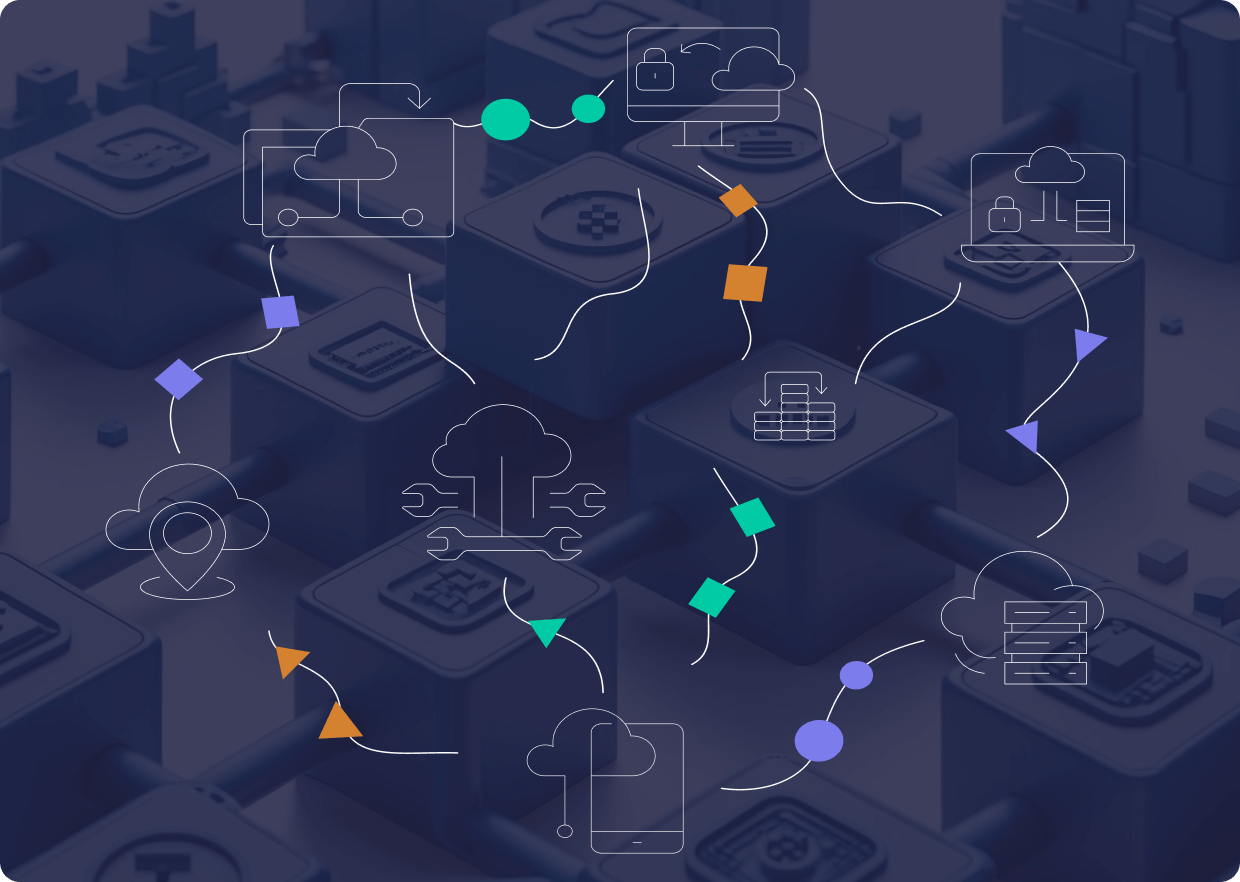
A cloud-based integration platform where integrations and information flows can be developed, monitored, and managed from a shared environment.
System integration encompasses far more than individual system connections. In modern integration environments, it is about creating connected information flows in which data can be shared, reused, and further developed across different platforms and services.
Common areas of integration include:
Information flows between finance, procurement, inventory, logistics, and other business-critical functions.
Data is shared between CRM platforms, ERP systems, analytics platforms, and other core solutions.
Information is exchanged between HR systems, payroll systems, identity management solutions, and other internal platforms.
Data from production systems, sensors, and other operational environments is integrated with the rest of the integration landscape.
Information from multiple systems is collected and made available for analytics, reporting, automation, and AI. What these areas have in common is that they contribute to an integration landscape in which information can be shared and further developed without complexity increasing at the same rate as the number of systems.
System integration is an area in which several related terms are often used interchangeably. To understand the integration landscape, it is important to distinguish between these components and the roles they play.
An API is an interface that enables systems to communicate with one another. APIs are a central building block in modern integrations because they enable standardized and secure communication between different applications. However, an API is not an integration strategy; it is a technology used to build integration flows.
ETL is a method for collecting, processing, and transferring data between different systems. It is primarily used in data platforms and analytics environments where large volumes of data need to be quality-assured, transformed, and made available for analytics and reporting.
A data platform collects, structures, and makes data available for reporting, analytics, and AI. The integration platform manages information flows between systems, while the data platform makes that information useful for analytics and decision support. The platforms serve different purposes but are closely interdependent.
System integration is therefore not simply about moving information between systems. It is about building an integration landscape that can be developed, reused, and managed as integration needs evolve.
System integration has evolved from a technical concern into a strategic capability. As integration landscapes grow and more systems, platforms, and data sources need to work together, it becomes essential to develop information flows without complexity increasing at the same rate.
According to MuleSoft’s 2025 Connectivity Benchmark Report, IT teams spend an average of 39 percent of their time designing, building, and testing new custom integrations. The survey included 1,050 IT leaders and shows how integration work can consume a significant share of an organization’s technical capacity.
A well-designed integration strategy makes it possible to:
System integration is therefore not only about connecting systems. It is about building the capabilities required to develop, manage, and scale the integration landscape as new requirements, platforms, and business needs emerge.

System integration has long been regarded as a technical discipline. As digital products, platforms, and integration environments have become more complex, it has evolved into a strategic capability. It is no longer simply about connecting systems, but about creating an integration landscape that can be developed, managed, and scaled over time.
As more systems, data sources, and digital services need to work together, the demands on how information flows are built and managed also increase. Integration capabilities therefore affect not only the technical architecture but also the ability to develop data platforms, analytics, AI, and new digital services without complexity increasing at the same rate.
The main challenge is rarely the number of systems. It is how information can be shared, reused, and further developed between them in a structured way. System integration has therefore become a strategic component of modern digital development.
For SaaS and product companies, more structured integration capabilities can enable faster launches of new integrations, reduce support workloads, and free up more time for the core product. More stable and traceable information flows also reduce friction in customer relationships and make it easier to meet security and regulatory requirements.
Integration environments are rarely built all at once. They evolve gradually as new systems, platforms, and services are introduced. When information flows grow without a shared integration strategy, complexity also increases. The challenge rarely lies in the individual systems, but in how they work together.
The more systems that are introduced without a clear integration strategy, the greater the complexity of the system landscape becomes.
As integration landscapes grow, the role of integrations also changes. The focus shifts from addressing individual integration needs to creating an integration capability that can support continuous development, new platforms, and changing business requirements.
When an organization wants to introduce new systems, develop data platforms, automate processes, or use AI, it needs access to accurate and up-to-date information from multiple sources. Without effective integrations, these initiatives become significantly more difficult to implement.
The integration platform therefore becomes an important part of the organization’s digital infrastructure and a central building block for future digital transformation.
As integration environments become more complex, data quality also becomes increasingly important. Decisions, reporting, analytics, and AI solutions are only as good as the data on which they are based.
Structured information flows create better conditions for high data quality, greater trust in information, and integration capabilities that can evolve over time.
System integration is therefore not only about connecting systems. It also lays the foundation for data platforms, analytics, AI, and continued digital development.
System integration is rarely simply about connecting two systems. The real challenge arises as system landscapes grow over time. New systems are introduced, legacy solutions remain in place, and information flows evolve without a shared strategy. The result is often an integration environment that is difficult to understand, manage, and develop further.
When information is stored across multiple systems without clearly defined integration flows, information silos emerge. Different parts of the information landscape may then rely on different versions of the same data, making it more difficult to create reliable information flows. This often results in poor data quality, unreliable reporting, and weaker decision-making data.
Many system integrations are built incrementally over a long period. New connections are created as needs emerge, often without considering the overall architecture. This may work in the short term. In the long term, however, it often leads to greater complexity, higher management costs, and increased dependencies between systems. The more integrations that are built without a shared structure, the more difficult it becomes to develop the system landscape.
When information flows are managed through numerous separate integrations, it becomes difficult to see how data moves between systems. This can create challenges related to traceability, security, data validation, access control, and regulatory compliance. As information security requirements and regulations such as GDPR and NIS2 become more stringent, this is an increasingly important aspect of integration work.
Data platforms, analytics solutions, and AI depend on access to accurate and up-to-date information from multiple systems. If integrations do not work effectively, it becomes difficult to collect, quality-assure, and make data available for analytics and automation. The problem is therefore rarely a lack of data. The problem is that the data is not available in the right structure, in the right place, at the right time.
System landscapes are constantly evolving. New systems are introduced, processes are developed, and information needs change. When the integration architecture lacks structure, every change becomes more extensive than necessary. New integrations require modifications across multiple parts of the system landscape, increasing both costs and lead times.
Most integration challenges do not arise from the technology itself. They arise when information flows, data management, and integration architecture lack a shared strategy.
Modern system integration is therefore not simply about connecting systems. It is about building an integration architecture in which information flows can be developed, quality-assured, and managed over time. This creates a stable foundation for digital transformation, data platforms, analytics, and AI.
An integration strategy is about creating a long-term framework for how information is shared, quality-assured, and further developed over time. The goal is not simply to connect systems, but to build a structure that makes the integration landscape easier to develop, manage, and scale. Organizations that generate long-term value from their integrations often build their integration strategy around several key principles.
An integration platform provides a shared structure for developing, monitoring, and managing integrations and information flows. Learn more about what defines a platform approach and which capabilities to evaluate in our guide to integration platforms.
Sharing information between different systems requires a common understanding of how data is defined and used. A clear information model reduces the risk of conflicting information, improves data quality, and creates a stronger foundation for reporting, analytics, and automation. It also provides an important foundation for data platforms and AI initiatives.
Many integration problems are fundamentally data-quality problems. If the information shared between systems is incomplete or inaccurate, these issues risk spreading throughout the system landscape. Data validation, quality controls, and traceability must therefore be integral parts of the integration strategy from the outset.
Information flows must be managed in a way that meets requirements for security, traceability, and regulatory compliance. When data is shared across multiple systems, it is important to be able to track how information is used, who has access to it, and how changes are managed over time. As requirements imposed by regulations such as GDPR and NIS2 become more stringent, this is an increasingly important aspect of integration work.
System landscapes are constantly evolving. New systems are introduced, processes are developed, and information needs change. A modern integration strategy must therefore make it possible to develop the integration architecture without requiring extensive rebuilding whenever conditions change. This reduces the risk of technical debt and makes the integration landscape more flexible over time.
An integration strategy creates value far beyond the integration work itself. It lays the foundation for data platforms, analytics, automation, and AI by ensuring that information can be shared between different systems in a controlled manner.
System integration thus becomes a strategic capability. When the integration architecture is designed for reuse, standardization, and long-term management, the integration environment can evolve in step with new requirements, platforms, and digital initiatives.
System integration affects multiple parts of an organization, but perspectives often differ. For the business, integration capability is about being able to use information reliably. For IT, it is about creating an integration landscape that is scalable, transparent, and able to evolve over time. Regardless of perspective, the goal is the same: to create information flows that can be developed, quality-assured, and managed securely and systematically.
For business leaders, access to accurate and up-to-date information is essential. When data is spread across multiple systems, reporting becomes time-consuming and decisions risk being based on conflicting information. By integrating ERP systems, CRM platforms, operational systems, and analytics platforms, an organization can create a shared information foundation. This improves data quality, makes reporting more efficient, and creates more opportunities for data-driven ways of working.
At the same time, information flows become more consistent, creating a stronger foundation for analytics, performance monitoring, and continued digital development.
For IT, integration often involves managing a growing number of systems, data sources, and information flows. Without a clear integration architecture, complexity increases rapidly, resulting in higher management costs, greater dependencies, and longer lead times when changes are required.
An integration platform provides a shared structure for developing, monitoring, and managing integrations, information flows, and data transformations. This makes it easier to monitor integrations, ensure data quality, and evolve the system landscape without creating unnecessary technical debt. The result is a more flexible and future-ready digital infrastructure that can support new systems, data platforms, automation, and future AI initiatives.
Although business and IT often approach integration from different perspectives, their objective is the same. The integration landscape must be able to evolve without complexity increasing at the same rate. This requires information flows that are reliable, reusable, and manageable over time.
This is why system integration has become a strategic capability rather than merely a technical discipline. When the integration architecture is designed for long-term development, it also provides a stable foundation for data platforms, automation, and AI.
System integration is not simply about connecting systems. It is about building an integration landscape in which information flows can be developed, reused, and managed as new systems, platforms, and integration needs emerge.
A well-designed integration architecture lays the foundation for data platforms, analytics, automation, and AI while allowing the integration environment to continue evolving without technical complexity increasing at the same rate.
This is why system integration has become a strategic capability. Organizations that invest in a scalable integration architecture are not only building better integrations today—they are also creating a stable foundation for continued digital development.
System integration is about far more than connecting systems. It is about creating an integration landscape in which information flows can be developed, reused, and managed as new systems, platforms, and integration needs emerge.
At Lundatech, we help organizations develop scalable integration strategies and architectures using Business Cloud as the foundation. The result is an integration capability that enables continued digital development, data platforms, automation, and AI.
Book a meeting with our integration specialists.

Streamline your system integration with iPaaS. Learn how a cloud-based integration platform improves data quality and creates a flexible IT...

What is digital transformation, really? Explore strategy, analysis, and structure to build a data-driven, flexible, and future-proof organization.

Streamline your operations with API integration. Connect your systems, automate workflows & gain complete control over your data—with help from...